OBESITY – THE NEW EPIDEMIC!

Obese Cat
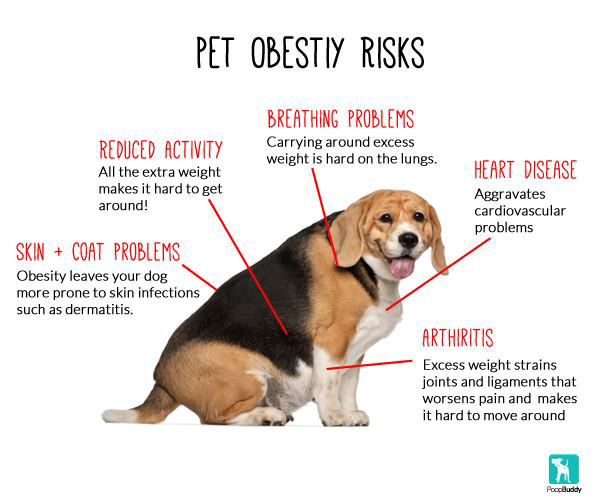
Did you know that nearly 50% of all our pets 
are overweight or obese? Keeping your pet slim and in good shape , can extend their life expectancy by up to 2 years and allows them to play, run and generally lead a happier life.

Why is it so important to keep my dog or cat trim?
At one time it was thought that fat tissue just sat around storing excess calories and adding to body mass. However, scientific studies have shown that fat tissue can be biologically active, producing inflammatory hormones and causing oxidative stress on the body, this in turn contributes to many disease processes such as: cancer, diabetes, heart disease etc and can lead to psychological depression.   

What do I do if I think my pet  is overweight?

People have different ideas as to what ‘normal’ is, fortunately there are guidelines that can help us establish to what extent your pet is over weight.

• you should be able to feel your pets ribs – hold your hand palm down and feel the knuckles with flat fingers of the other hand, this is how your dogs ribs should feel behind the shoulder blades. This goes for cats too.
• your vet can accurately weigh and measure your pet in order to establish where your pet sits on the body conditioning charts. This is important as it helps us monitor progress during weight loss. 

Feed the right food , in the right quantity, at the right time.

• reducing the quantity of food your pet normally  eats probably wont help with weight loss and could lead to nutritional deficiencies.
• listen to your vet – use a food that is specifically design to aide weight loss ( there are many available) and stick to it!
• don’t be tempted to give treats or feed more than is recommended. Most weight loss diets will not leave your pet hungry- so don’t be fooled.
• allowing unlimited access to food is the most common cause of obesity in cats. Have specific feeding times and remove food that is not eaten.

Join a slimming plan!

• many of the food companies have a slimming plan that gives help and encouragement to pet owners whose animals are on weight reducing foods. Most practices are involved in one or more of the programmes and can register you on the websites. They are great for keeping an accurate record of your pets progress and most companies will send you freebies for all your hard work!

In for the long haul….

Weight loss doesn’t happen over night, it is a long process that needs commitment from you the owner, particularly when things are going slowly. 
We all love our companion animals and want them to have a happy, healthy and long life. By taking the first steps to help your overweight pet you are being a responsible owner.

Don’t kill them with kindness!            

Help them enjoy life!
Kenilworth Vet, Harfield Village

CRASH COURSE ON FeLV AND FIV INFECTIONS IN CATS


Many cat lovers amongst you have heard the term FeLV and FIV. Some of you may even be unfortunate enough to have lost a cat to one of these diseases and yet other pet owners are completely unaware that they exist. So let’s have a quick look at these viruses and see what we can do to protect our pets.

FeLV - Feline Leukemia Virus: What is it and what does it do?
·         Feline Leukemia is the most common cause of cancer in cats.
·          It can cause blood disorders and lead to a state of immune deficiency, hindering the cat's ability to protect itself against other infections.
·         You will often see no sign of FeLV until your cat’s health progressively deteriorates over weeks, months, or even years causing recurrent illness interspersed with periods of relative health.

How is it spread?
·         The virus is shed in high quantities in saliva and nasal secretions, urine, feces, and milk from infected cats.
·         Cat-to-cat transfer can occur from bite wounds, during mutual grooming, and very rarely through the shared use of litter boxes and feeding dishes.
·         Transmission can take place from an infected mother cat to her kittens, either before they are born or while they are nursing.
·         However, FeL virus does not survive long outside a cat's body and die in a few hours under normal household conditions.

FIV – Feline Immunodeficiency Virus: What is it and what does it do?
·         Causes immune deficiency that eventually leaves the cat vulnerable to infections that would normally not be life threatening.
·         A cat infected with FIV may show no symptoms for years.

How is it spread?
·         It is transmitted from one cat to another mainly through bite wounds.
The following symptoms are commonly seen in both of these diseases.
·         Cat in generally poor condition with persistent fever and loss of appetite
·         Inflammation of the gums (gingivitis) and mouth (stomatitis)
·         chronic or recurrent infections of the skin, urinary bladder, and upper respiratory tract
·         Persistent diarrhea
·         Persistent eye conditions
·         Slow but progressive weight loss with severe wasting late in the disease process
·         Various kinds of cancer and blood diseases are much more common in cats infected with FIV
·         Unspayed female cats may  abort of kittens or have other reproductive failures
·         Some infected cats experience seizures, behavior changes, and other neurological symptoms
What can we do?
Test your cat  – Your vet should have a combo test that can tell you if your cat is positive or negative for FeLV and FIV, early detection will  help with the management of  yours cat’s health and also allow you to help avoid spreading infection to other cats.
Vaccinate your cat – a vaccine is available against the FeLV virus (can only be used on uninfected cats)
Sterilise your cat – male and female cats should be sterilized
Hope this has helped you understand these diseases. Let’s keep our cat population happy and healthy!

Kenilworth Vet, Harfield Village