July in the Garden

This Winter seems to be quite mild so far, and thankfully there have been a few days of decent rain. Hoping for much more to fill our tanks and dams! July is perhaps the month in the year with the least need for human involvement in food gardening, and the plant list is the shortest in July. So, here is this month's gardening tip: Stay warm, and perhaps go through old clothes and bedding to pass some of what you do not need anymore on to the many who do. Let's share the warmth this Winter!

Plant List for July:
Broad Beans, Beetroot, Chard/Spinach, Cape Gooseberry, Celery, Chives, Chili Peppers, Lettuce, Onion, Parsley, Peas, Potato, Radish, Tomato

CHOCOLATE MACAROONS

These Macaroons are delicious and easy to make.  I have made them gluten free by adding cornflour instead of flour.  They last for weeks in an airtight container.  In fact I found a few I had forgotten about months later and they were super.


INGREDIENTS:

3 egg whites
200gms castor sugar
1 ½ tbls plain flour
25g ( ¼) cup cocoa
150gms ground almonds

METHOD: 

Whisk egg whites until soft peaks form, then gradually add sugar, whisking well after each addition to dissolve sugar, until mixture smooth and glossy.

Sift flour and cocoa together, then stir in ground almonds.  Gently stir flour mixture into egg white mixture until just combined.  Spoon tablespoonsfuls of mixture onto a baking paper-lined oven tray and bake at 180C for 10 – 15 mins or until crisp on the outside but still soft in the centre.  Stand macaroons for 10 mins, then transfer to a wire rack to cool.

Makes about 24


Watch your Winter Alcohol Habits

What is better than sitting in front of a blazing fire drinking a glass of red wine or whiskey?  These seem to be common habits that start as the nights get colder.  But are you aware of what you are doing to your body?  Are you paying attention to how much you are drinking and how you are feeling in the morning?  Let’s take a look at how we can enjoy some alcohol but not undo our health and wellness goals.


Alcohol and health
Alcohol can be detrimental to your health if it is regularly consumed in large amounts. It can have a negative effect on your nutritional status as it reduces the absorption and use of certain vitamins and minerals.  Studies have shown that an excessive alcohol intake contributes to an increased risk of the development of cancer and alcoholic liver disease.  Excessive alcohol can also contribute to the development of osteoporosis and worsen the symptoms of gout because of an increase of uric acid production.  Three or more alcohol containing drinks a day can also increase blood pressure. 

Alcohol and weight
Alcohol consumption can also lead to weight problems because of its high calorie value (7kcal per 1g alcohol).  Often high calorie mixers are also added to the alcohol (such as soft drinks, fruit juices).  During alcohol consumption our control is often decreased leading to overeating and drinking more.  And the foods that are eaten together with the consumption of alcohol (e.g. crisps) are often high in fat.  Alcohol also slows down fat metabolism.  All of these factors can lead to an increase of weight. 

What can you do to enjoy a drink and keep it healthy?
You can enjoy a drink AND be healthy and lose weight, but it means making some trade-offs.  An alcohol unit is defined in terms of a ‘standard drink’, which has the equivalent of about 10g alcohol.  Alcohol isn’t the only component of a drink that determines its calorie content.  Some drinks are also rich in sugar (carbohydrates) and therefore contain more calories.  Beer contains more carbohydrate than spirits, but spirits are often consumed with mixers increasing the calorie content.  When alcohol is consumed as part of a healthy eating plan, the guideline is no more than two drinks every day for women and no more than three drinks every day for men. 

An alcohol unit:
125ml of dry white or red wine or champagne
25ml of spirits
1 can of beer or cider

If you need to control your calorie intake, you can exchange one carbohydrate serving/unit for one alcoholic unit.  Beer, cider and caloric rich mixers need an extra carbohydrate serving/unit for their carbohydrates.

Tips for cutting down on your alcohol intake
        Make a decision about what you will be drinking before you go out – when you have a plan, it is easier not to get carried away!
        When you arrive at a function or restaurant ask for water first (make it sparkling for variation) and only start with the alcohol at a later stage
        Make a wise decision about WHAT you will be drinking – sometimes it is better to have a spirit with a ‘free’ cooldrink (e.g. vodka and coke light or whiskey and water) instead of wine – if bottles of wine are being ordered, your glass will be constantly topped up and you easily lose track of how much you are drinking!
        If you do want to drink wine, ‘dilute’ it with (sparkling or soda) water, ice cubes or sprite zero, and rather order your wine by the glass than ordering a bottle – make the excuse that you feel like a different wine
        Similarly with beer or cider rather have a shandy
        Get into the mind-set that you are going out to socialize with your friends, not to drink!  You do not need alcohol to have a good time
        Have an event planned for the following day – book a session with your trainer at the gym or organize a run with friends – you will WANT to drink less as doing these activities without a hangover is so much more pleasant
        Be the designated driver!


Kim Hofmann RD(SA)
Phone: 021 674 4666
Cell: 084 206 2715
E-mail: mailto:kimh.rd@mweb.co.za


Aging Pets


It seems that these days people are living to a ripe old age, we are healthier and more active for longer and, because of the advances in veterinary medicine our pets are too! So here are some tips on how you can help your pet get the most out of the golden years!


HOW OLD IS OLD?

We generally divide a pet’s life into four stages: paediatric, adult, senior and geriatric. Depending on the breed of animal the time the pet experiences these stages will vary. For example, large breed dogs tend to live a shorter life and are considered ‘senior’ at around 5-6 years of age, whereas smaller breeds are considered ‘senior ’between the ages of 7-8yres.  For cats its around 7-11 years.

It is at this senior stage that the body begins to show the subtle signs of aging that often go undetected by the owner.

CHRONIC DISEASE AND THE HEALTH CHECK

At this senior stage of your pet’s life there are many underlying health issues, such as the kidney disease, heart disease and arthritis, that can be picked up by screening at a general health check. If your pet seems to be ‘slowing down’ or isn’t eating as well as he used to don’t just accept this as normal as it may be suffering from early arthritis or just need a good teeth clean!

Getting your senior dog or cat checked allows us to help your pet have the healthiest happiest old age possible.


WE ARE WHAT WE EAT!


Good nutrition is just as important for your senior pet as it is for your puppy.

As your pet ages you may find that it is no longer as active as it used to be. Studies have shown that the energy requirements of your pet decreases from 7 years onwards and it is often at this stage in your pet’s life that weight gain becomes a concern. Obesity is detrimental to your pet’s wellbeing at any life stage but as your pet ages, being overweight adds further stress to heart, lungs and arthritic joints. In its geriatric years (from about 13 years onwards) your pet may become underweight due to muscle loss and reduced digestibility of nutrients such as protein and fats.

 Therefore, it is important to feed a diet that has been scientifically formulated to take into consideration the nutritional needs of your aging pet. Many diets are available that aid in the control of diabetes, arthritis, kidney disease, thyroid deficiency and cognitive disorder to name but a few.


GIVE ME A SMILE!

One of the saddest things we see in practice is pets that are extremely loved but neglected because they are OLD! They no longer get groomed or bathed but …..

One of the worst areas of neglect that we see is your pets teeth!


Not all dogs and cats have dental problems but by the time they reach the senior years many do need a good tooth clean. Your dog or cat’s breath should not smell bad all the time! When the teeth are bad (such as in the picture above) and covered in tartar the mouth is full of bacteria which your pet’s immune system must try to combat on a daily basis. This does affect the wellbeing of your pet!

So next time your aging dog decides he doesn’t want to go for that run or your cat no longer wants to jump onto the kitchen counter book an appointment with your vet! 


47 Kenilworth Road, Cape Town
kenvet@telkomsa.net
Telephone: 021-671-5018


Bipolar disorder


Psychiatric disorder is more common  than we may think. One such common disorder, which could be linked to our increasingly busy, isolated and stressful lives, is bipolar disorder.  What is bipolar disorder, what happens in the brain, and how do friends and loved ones help a person who may suffer with it?


By Dr Samantha J. Brooks Ph.D.

Bipolar disorder – a mood disorder characterised by polar extremes of mood – was once known as “manic-depressive disorder”, which sheds light on the symptoms of this often debilating psychiatric condition.While it is normal to experience fluctuating periods of happiness and sadness associated with usual life circumstances, a person diagnosed with bipolar disorder will have triggered swings from extreme happiness and high levels of energy, to extreme sadness and hopelessness, within a matter of hours or days. Extreme happiness presents as mania, such that a person becomes excessively active in behaviour and speech, finds it difficult to sleep or sit still without fidgeting, and may have racing thoughts and ideas that fly quickly through the mind in illogical succession.  A person in the manic phase may take more risks, such as being more sexually active, taking drugs or spending more money.  Compare the manic phase to extreme sadness, where a person may experience debilitating depression and limited energy.  During the depressive phase a person may sleep all day and feel as if everything in their world is hopeless, with no motivation to change things. Both extremes are like a see-saw for the individual with bipolar disorder, who will likely experience no sense of organisation or control over their life. The extremes of bipolar disorder are associated with fluctuating neurotransmitter levels in the brain – a significant rise in dopamine levels for mania and a significant drop in serotonin and opioid levels for depression.  Less extreme versions of this debilitating condition – that often see people eventually losing their jobs, becoming withdrawn and not engaging in everyday activities – are known as hypomanic states.
It is important to remember that victims of domestic and emotional abuse may appear – or are led to believe that they are – behaving in a manner akin to bipolar disorder, and if this is happening to you it is vital to seek urgent support. A correct diagnosis of bipolar disorder does not stem from a disgruntled partner, an ex or a psychopathic boss, who may gain pleasure in causing upset and confusion – a manipulative tactic known in modern parlance as gaslighting – but rather stems from meeting strict criteria in the Diagnostic and Statistical Manual Version 5 (DSM-5). The DSM-5 can be relied upon – as the bible of psychiatrists – to determine real cases of psychiatric disorder, so that the individual sufferer can receive vital treatment (such as pharmacotherapy or counselling) to improve their quality of life.  The DSM-5 recognises four main types of bipolar disorder.  The first is Bipolar I Disorder, where manic episodes last for at least 7 days and severely consume the energy resources of the individual, to the point where they may need hospitalisation. Depressive symptoms usually co-occur for around 2 weeks and may also be present during episodes of mania.  The second is Bipolar II Disorder, which is defined as a successive pattern of unprovoked depressive symptoms and hypomanic states that cycle for at least 7 days, and might even surprisingly occur at the same time.  The third is Cyclothymic Disorder (also called cyclothymia), defined by numerous periods of hypomanic and depressive episodes lasting consecutively for at least 2 years (1 year in children and adolescents). Finally, Unspecified Bipolar Disorder is a catch-all category, where a person may exhibit episodes of mania or depression, but not usually within the same timescales as the main diagnoses.

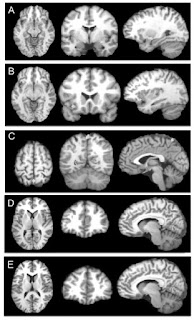
What then, are the neuroscientific bases of a DSM-5 diagnosis of bipolar disorder – in other words, which brain regions are more activated in the MRI scanner? Recent studies of bipolar disorder have demonstrated, particularly in response to emotional stimuli like faces, that an over-active connectivity occurs between the amygdalae and prefrontal cortex – brain regions associated with arousal/fear and goal-directed behaviours respectively. This suggests that people with bipolar disorder may not be able to effectively self-regulate their emotional responses to their environment.  Such hyperactivity in the brain may also be associated with learned responses that began during significant past trauma, or may even be due to the increasingly stressful, busy and socially-isolated lives we lead today.  For example, chronic trauma, stress and social isolation (e.g. due to long working hours and parental separation) may cause a downregulation (reduction) of opioid receptors in the brain – the locks to the pain-relieving brain hormone keys. Opioids are the brain’s natural defense to pain – including emotional pain – and so if chronic emotional pain is experienced, opioids may become less potent over time.  We also release opioids and other hormones, such as oxytocin, during intimate pair-bonding.  If emotional and/or physical abuse is chronically experienced, a person may begin to exhibit more and more signs akin to emotional dysregulation and bipolar disorder.

And so, if you are a friend or family of a person who may be exhibiting manic or depressive   coupled with periods of low energy and hopelessness, in a cyclical pattern over long periods, with no obvious cause, it might be useful to do the following.  First, gently communicate with the person, to try to establish if there are serious, underlying causes for this behaviour, such as physical or emotional abuse (don’t simply assume that they are suffering from bipolar disorder).  Be prepared that the person may not wish to open up immediately, but be supportive and accepting.  If no obvious cause for the behaviour is established, then the second step might be to suggest the person visit a psychotherapist, to talk through with a trained professional who can establish the cause.  Finally, with the help of the therapist, a formal diagnosis for the behaviour can be established and treated, usually with a combination of suitable medication and further psychotherapy. 
symptoms, such as excessive energy, lack of sleep and risky behaviour (promiscuity, excessive spending and debt, gambling),

The ultimate take-home message is this: don’t be quick to give a layman’s diagnosis to a person who may exhibit symptoms akin to bipolar disorder, as there may be other reasons for their behaviour.  However, if a formal diagnosis by a trained professional is established, a person suffering with bipolar disorder has a wealth of treatment options available to him or her, that can enable them to continue living a fullfilling, enjoyable life!  We must always remember: life is too short and too precious to cause - or exacerbate - human suffering!


Dr Samantha Brooks is a neuroscientist at the UCT Department of Psychiatry and Mental Health, specialising in the neural correlates of impulse control from eating disorders to addiction.  For more information on neuroscience at UCT and to contact Samantha, see www.drsamanthabrooks.com. Note: Images royalty free, courtesy of https://commons.wikimedia.org/wiki.


Click to read all previous articles by Dr Samantha J. Brooks Ph.D. 


The future is homes that are smaller, smarter and greener


Affordability, convenience and security are the key factors driving a distinct buyer preference at the moment for smaller homes packed with “green” features and “smart” technologies.

That’s the word from, SA’s biggest bond originator, who says that affordability remains a serious concern for most buyers because they are still labouring under relatively heavy debt loads and worried about rising taxes and the increasing cost of food, fuel and utilities. “SA consumers are much more conservative spenders than they used to be and really careful now about getting in over their heads.

“Consequently, while the banks are keen to lend to homebuyers and our bond approval rate is at 80%, the highest level since the 2008/ 09 financial crash, the latest statistics from Absa show that the total of outstanding household mortgage balances is currently growing more slowly than it did last year. The year-on-year growth rate is down from 3,6% in November 2017 to 3,1% currently.”


This does not mean, he says, that South Africans are buying fewer homes – only that they are buying less expensive homes. “This is confirmed by our own statistics*, which show that more than three-quarters (78%) of the bonds granted in the past 12 months have been for less than R1,5m – and that 60% were actually for less than R1m.

“In general terms, these cheaper homes are also smaller, as indicated by recent FNB research showing that the average size of new homes being built in SA has shrunk from a peak of 203sqm in 1974 to around 162sqm now – and that accounts in large measure for the current slow growth in home prices (2,9% year-on-year) in spite of a drop in the prime interest rate and increased sales volumes.” 
However, Botha says, affordability is not the only reason for the increased popularity of smaller, cheaper homes. “Changing lifestyles also play a big role. Household sizes are shrinking, for example, so buyers generally need fewer bedrooms. Many homeowners now are also short of time so don’t want a large garden or home to maintain. Traffic congestion is also driving a significant shift from the large homes of the suburbs to smaller homes in urban centres. 

“In the SA context it must be said that smaller properties are usually also easier and less expensive to secure, and the effect of this concern can clearly be seen not only in the increasing number of estate developments, but also in the steady growth of Sectional Title in SA over the past 30 years. In the late 1980s, secure sectional title developments accounted for only 6% of new builds in the country, but today they account for 27% of all new homes.”

The quest for greater security and personal safety, he says, is also one of the main factors driving the current rapid uptake of “smart” home technologies in SA. “Using these technologies, owners can monitor their alarm systems and security cameras via their smart-phones even when they are not at home, photograph any intruders, open or close garage doors and gates, and turn lights on and off to make it seem as though there is someone at home.   

“This is definitely appealing to SA homeowners and according to Statista, the overall value of the smart home automation market in SA is expected to top US$60m by 2020. Meanwhile, there is already sufficient demand for local security companies such as Fidelity ADT to have introduced security-focused smart home packages.”

And finally, says Botha, the trend towards smaller homes is being driven by a growing awareness among SA homebuyers of what it costs in environmental terms to run a larger home. “Cape Town residents have seen, for example, how much water can be saved just through more conscious usage, while the threat of renewed rolling blackouts this winter is causing many others to revisit the drawbacks of electricity derived from fossil fuels.

“As a result there is rising demand for smaller homes that use less energy and water and are already fitted with ‘green’ equipment such as heat pumps, solar panels and rainwater tanks. And some of the banks now even have special home loan options for owners who want to retrofit such ‘green’ systems, because doing so definitely adds value to their properties.”


Anne-Marie Bamber is Norgarb Properties dedicated Home Loans Consultant. She has over 15 years’ experience in assisting clients with their Home Loan needs and has placed many happy families in their dream homes.

Contact her today for no cost stress-free home-buying.
Anne-Marie Bamber
Home Loans consultant
Tel: +27 (0)21 851 3568 | Fax: +27 (0)21 441 1494 | Cell: +27 (0)82 071 1665
E-mail: anne-marie.bamber@betterlife.co.za


Permission to Braai


One day you wake up and think that you're finally going to build that built in braai you've wanted for years. It should be easy, choose a spot, grab the bricks, cement it all together...

However, there is more to a built-in braai than just throwing bricks together. There are all sorts of things you need to consider - the height of the flue, spark inhibitors, the proximity to roofing timbers, wind, rain, heat, planning permission, and so on.

One of the most frequently asked questions is: "Do I need planning permission for a built in braai?"
Well, yes and no. A built in braai is normally classified as "minor building work" and whilst you do not need to submit plans, The National Building Regulations and Building Standards Act (No. 103 of 1977) states that no person may erect, alter, add to, or convert any building without prior approval by the local authority. So as long as you comply with the "minor building work" regulations and have received permission from the local authority's building control officer, you do not need to submit any plans.

If your braai does not fall under "minor building work" then you will need to submit plans for approval before building commences. If you are not sure which category your built-in braai will fall under, it is probably best to check with your council just to be sure. If your braai is being built against a boundary wall, in most parts of SA, your neighbours' consent will be required. This can be done by informing them in writing. Keep in mind that they might object if the smoke will interfere with their own property and the enjoyment thereof.

Because the regulations can be a bit of a minefield and no case is the same, it is probably best to contact your local building inspectors for advice on where and how to begin. From there you can go to the planning department of your local municipality. If plans are needed, by law, only building plans from professionals registered with the South African Council for the Architectural Profession will be accepted. This may seem like a complicated task, but you won't regret the fees when you have peace of mind that the person you've hired has sound knowledge of the regulations and you can get everything right the first-time round.

Happy braai building!

Norgarb Properties Agent Andre Ter Moshuizen who specialises in the Claremont area, shares some household tips and handy home hints with you every month. Read more of his articles here. [https://harfield-village.blogspot.co.za/search?q=andre]

Andre Ter Moshuizen: 082 602 1367 | andre@norgarb.co.za | www.norgarbproperties.co.za [http://www.norgarbproperties.co.za/]


www.harfield-village.co.za
www.facebook.com/harfield.village.community