Understand the benefits of paying a bigger deposit on your home.

Btbbondratio 1 last

Higher deposit, lower LTV, better home loan…

Approved/ date

There’s a vital factor that home buyers need to be aware of when they apply for a home loan, and that is the loan-to-value ratio.

So says Rudi Botha, CEO of BetterBond, SA’s biggest bond originator, who notes that this ratio - known in the home loan sector as the LTV – can make all the difference when banks are deciding whether to approve or refuse a loan application.

“The LTV is basically the requested loan amount expressed as a percentage of the purchase price – or as a percentage of the appraised value of the property, if this is different from the purchase price.”

For example, he says, if the property costs R2m and the buyer is putting down a R200 000 (10%) deposit, the loan required would be R1,8m, so the LTV would usually be 90%.

“However, if it turns out that the bank’s evaluation of the property’s value is only R1,9m, the loan of R1,8m would actually equate to an LTV of 95% as far as the bank is concerned, and that could actually result in the application being turned down.

“This once again underlines the advantage of saving up the biggest deposit possible before your next home purchase.”

The bigger the deposit and the lower the LTV percentage, the more attractive the loan from the lender's point of view, notes Botha, “because the more ‘skin in the game’ that prospective borrowers have, the lower the risk of them defaulting and the bank having to get a debt judgment and repossess the property.

“For this reason, most banks are prepared to negotiate lower interest rates on low LTV applications, especially if you apply through a reputable bond originator like BetterBond, which will approach all the banks to ensure that you get the best available home loan deal.

“And a lower interest rate means more affordable monthly repayments, plus big savings on the total cost of your home over the lifetime of the bond. On a R1,5m bond taken over 20 years, for example, an interest rate that is just 0,5% lower than the current prime rate of 10,25% will save you up to R120 000.”

In short, the lower the LTV that home buyers can achieve by paying a sizeable deposit (or if they are lucky by securing the property at a discount to market value), the more likely they are to have their home loan application approved, and the more favourable the terms will be.

Issued by etc.

Day Zero 6 toilet facts

DAY ZERO
6 toilet facts you need to know

OUR BIGGEST WATER GUZZLER IS THE TOILET

1. If the taps are turned off how will I flush my toilet? 
You will be able to flush your toilets with rainwater or greywater. If absolutely necessary, use bottled water – but using drinking water is a dreadful waste and we need to preserve it for drinking. Ultimately, Cape Town will move away from using fresh water to flush toilets and the CoCT is currently investigating alternatives.

2. Can I flush my toilet with seawater?
No. Flushing with seawater is NOT an option.  Seawater increases salt in the waste water treatment plants, and if the salinity levels get too high the microbes which treat the sewage can’t survive and the treatment plants will stop working. The same principle applies to septic tank systems, which rely on microbes to decompose the sewage.

3. Will the sewer systems still work after Day Zero?
The City of Cape Town has indicated that the sewer systems will continue to work after Day Zero. They intend to flush the system at appropriate points to try and keep the sewage moving. However it is important for all of us to minimise (as much as possible) the amount of dry product put into our toilets such as toilet paper, wipes, tampons etc. Wherever you can, please use alternative, hygienic, disposal methods.

4. What is more dangerous: urine or faeces?
Faeces (poo) is more dangerous as it contains disease-carrying bacteria and microbes.  Good sanitation, combined with hand-washing/hand-sanitizers, dramatically reduces the risk of disease.
5. Is a dry toilet a realistic option?
The easiest option is a dry compost toilet. This is a bucket housed in a box to support your weight with a toilet seat of your choice and organic material to cover the poo. The cover material can be sawdust or decomposed compost (lots of good bugs). If you use a dry compost system it’s really important to keep your face well clear when handling the buckets and use a good pair of kitchen gloves that you can clean and re-use specially for the task.

6. How do I know if a dry toilet is working properly?
A dry (bucket) toilet works properly if your material doesn’t leak out of the container/bucket, if you can pick up the container comfortably, and if the container can be closed. A composting toilet (which is bigger than a bucket) works well if it doesn’t smell. If it smells of ammonia, add more organic material. If it rots, there is too much liquid, this may be a design flaw, so if you go the compost toilet route, try having a way to safely remove some liquid with a tap at the bottom.

Other options to consider are commercial composting toilets or chemical toilets.

Useful links

web.facebook.com/groups/drysanitation
web.facebook.com/CompostLoo
www.diyhousebuilding.com/bucket-toilets.html
www.composttoilets.co.nz

Whichever you choose, be sure to do thorough research on cost and practicality. And try to prevent further harm to our environment.

* information sourced from WWF

Article by Madge Gibson, Harfield Village Resident

Fitness Challenges: The Pros/Cons


Here’s the thing: there’s nothing wrong with trying to improve yourself - and a challenge might be a good way to motivate yourself. But we should probably discuss whether it’s the best way to go about it and since I’m not really doing anything else right now it seems like a good time.


Firstly, the ground rules. For any exercise strategy to work you’ll need three things:

  • Effort - is what you’re doing challenging enough to make your body respond?
  • Consistency - are you doing it regularly enough to build on those responses?
  • Progress - are you increasing the challenge regularly to ensure you keep responding?
So let’s apply this to the idea of a typical “squat challenge" - a month of daily routines of bodyweight squats. If you’ve never done squats, it will be a challenge to your body and induce a response (stronger booty). The almost-daily nature is certainly consistent. And the escalating challenge is as progressive as a drama major. So from the outset, it seems like a winner.

Not so fast.

Let's look closer. Starting with effort - how much is too much? Could this challenge be excessive for some? Absolutely. And that could lead to an injury. Same for consistency - if your body is not getting time to recover it might break down instead of build up. Not good. And then let's discuss the nature of progress. So you get to the end of the month. Now what? Just keep adding squats ad nauseam? Just squat from sunrise to set? This is your life now? I'm mostly joking.


My point is this: muscle growth is caused by three interrelated things:
  1. Muscle tension - the amount of weight you're putting on the glutes
  2. Muscle damage - the microscopic tears that happen every time you contract your glutes
  3. Muscle fatigue - the chemicals released when the muscle runs out of juice
Why am I telling you this? Because if you want to keep improving that badonkadonk, you'll need to keep increasing at least one of those three factors. (And fyi: most of your strength gains in the first few weeks are due to neurological changes - not muscle gains.)

Will it be fatigue? There is only so tired you can make a muscle. When it's done, it's done. And increasing the volume of squats will take longer and longer. So, perhaps damage? Firstly: ouch. Secondly: there is a definitely such a thing as too much damage (obviously). And so: to my point. Smart money says increasing the tension is your best bet to continue improving. That means more weight i.e. put something on your back before you drop it low and pick it up slow.

And so my conclusion:

  • Squat challenges can be a great jump-start to rearranging the junk in yo trunk
  • With great power comes great responsibility - don’t stick to a program if it’s hurting you.
  • Our bodies don’t change overnight, nor even overmonth (it’s a word now ssshhh) - you need to keep progressing for far longer than a month to make proper changes and that probably means more tension i.e. resistance i.e. weights/bands/whatevs.
  • Remember: effort, consistency, and progress.

8 Smart and inexpensive water-saving tips and tricks

By now you’re probably doing many things in order to save water such as having a one-minute power shower, making the kids have ‘bucket baths’, reusing your grey shower and washing machine water to flush the toilets and you’re definitely no longer watering your gardens or your cars.

We’re getting more water savvy thanks to Cape Town’s severe drought and subsequent water crisis but there are more products coming onto the market (or currently in it) that you may not be familiar with, which are inexpensive to purchase and can help you maintain your garden, keep the family clean and store water for that much longer.

Norgarb Properties, which is campaigning for homeowners to be water wise, has interviewed Aslam Davids (pictured), junior department manager for the Stodels shop department, among other experts and companies specializing in water saving tips and products, and compiled the list below to help you save more water – a very precious resource for those in the Western Cape.


Being water wise and investing in water saving techniques can help to improve property prices says Lew Norgarb, principal of Norgarb Properties. “Cape Town is going through a difficult time at the moment with the water crisis and buyers are hesitant as there is so much uncertainty in the market. If you’ve already placed water-saving products into your home it can go a long way to helping you in selling your property if that’s what you want to do.”

“Even if you’re not selling your property,” adds Lew, “you can’t go wrong with adopting some of these crucial water saving techniques and buying these relatively cheap products, which will save water, improve the look of you garden, and money as well.”

Norgarb’s top water saving tips and tricks


1. Products that keep your garden alive: Use these products to keep the soil moist in your garden. Stodels in Kenilworth has several products that can help including EXLGel (R9.95* for a 5gram sachet) is a water retention product which gets mixed in the soil. There’s also the Wonder brand’s Stockosorb (R129.95 for 200g), which are water wise crystals, which provides increased water holding capacity for flower beds, hanging baskets, shrubs and trees, lawns and vegetable gardens. Alternatively, there’s SaturAid (R59.95 for 250ml), from Debco, which leaches into the garden beds and lawns which keeps the soil moist at all times.


2. Collapsible water storage tanks: Now that JoJo tanks are selling like hot cakes there are various other water storage tank-like products that are coming into the market. Stodels’ Eezee tanks may not be able to store thousands of litres (the biggest size is 500L, R1,359.95 and the smallest is 100L for R699.95) but the benefit here is that once the water crisis is over you can fold them up and store them in the garage and only bring them out again if another crisis should occur. Gutter hoses are sold separately and 5m hoses are sold for R149.95. Simply attach the gutter hose using cable ties.


3. Takealot’s water store: If you are happy to buy online, Takealot has a dedicated water store where you can find everything from tanks, taps to buckets and bottled water among other items. Delivery takes 1-4 working days. Check out the SWS Waterwizz Flood Stop Safety Valve (R107) which automatically cuts off the water to your washing machine and dishwasher should there be any overflow.

4. Dry shampoo: Did you know that you can use up to 50 litres of water, just by washing your hair? There’s a few dry shampoos on offer in the market, such as Batiste, which requires no water and refreshes your hair between washes. Batiste offers a range of products to choose from for use between washes which will make your hair look good. It’s available in 200ml and 50ml from Dis-Chem and Clicks stores.


5. Replacing your cleansers: You should adapt our beauty regime but considering products like Sorbet’s Salon Skin Micellar Water. It’s a great alternative as it requires no water to clean your face. Buy a 100ml bottle for R60 or 300ml for R130.

6. Water purifiers and sterilisers: With the water in Cape Town looking a bit grainy these days you may want to consider getting some water purifiers. There’s also P&G’s Purifier of Water packets. Each four-gram powdered packet treats 10 litres of heavily contaminated water by killing bacteria and viruses and removing parasites and solid materials. Ten litres of dirty water can be purified in 30 minutes. P&G is working with Gift of the Givers in areas around South Africa to provide relief on the current storage of clean water by distributing sachets for free to people who need it most. A basic Google search however prices the product at R680 on Wantitall, which will take a few weeks to get to you as it’s imported from America.

A cheaper alternative also includes Milton Tablets and Milton Sterilising Fluid, which are made from sodium hypochlorite and sodium chloride. Milton has multiple uses, including water purification for drinking, grey water sterilization for household use, minimizing toilet odours and washing of vegetables and fruit to prevent the spread of bacteria. You can find Milton at Clicks, Dis-chem, Shoprite, Pick n Pay (Milton Sterilising Fluid 500ml R44.99 or 1L for R74.99; Tablets R44.99), Spar and most independent pharmacies.

7. Using disposable and reusable items: If you’re keen on using less water then using disposable paper plates and cups. As these aren’t kinder to the environment you may want to consider alternatives, such as reusable cups for coffee (Vida are these days not offering customers cups, but disposable ones instead). They’re available from Yuppiechef for R199. Instead of putting yoghurts, smoothies and such in a bowl for your kids, why not make use of a reusable pouches. They’re on sale at Mombabbles.com.

8. Camping washing machines: Your washing machine uses up a lot of water. Consider buying camping washing machines and dryers. You can get a Spindel Laundry dryer from Yuppiechef for R2,099. There’s also the Sputnik Wonder Wash Pressure Washing Machine. You can order it from Sustainable.co.za, but there is a four week lead time on all new and existing orders.

Further reading:

The City of Cape Town has provided these handy guides for safe ways to use water and how to ensure you keep your health in check during the crisis.
Blogs:
*All prices are subject to change. Prices correct as at 9 February, 2018.

Norgarb Properties


Spring Cleaning your business for a New Financial Year


As the financial year draws to a close on the 28th February, and the new Financial year approaches. It’s time to have a look at our businesses and how they are doing.

Find what works and what doesn’t. Toss what’s not working and put new things in place.
Some finance tips, suggestions for a better year.

1. One of the first things to do is get your bookkeeping systems in place for the new year. Don’t procrastinate, don’t put it off for tomorrow. Have a look at your current system and see what isn’t working and what is working. If you like to do it yourself that is fabulous, find a system that works and that works for your accountant. Find that Bookkeeper or accountant that works with you. An accounting software, that I found is very user-friendly. Great for non-accounting people is Wave accounting. Recommended to me by my web designer and I have been using it and so have some of my clients. Best of all its free to use. www.waveapps.com

2. Understand your cash-flow, know what’s coming in and what is going out. February is when we hear the Tax budget, take note of the budget and how it is going to affect you and your business. So you prepare for a great year. Be aware of your business season and start putting away for that rainy day. The months when there is no income but the expenses are still occurring. Find another business that ties to your business but has their good season in your rainy season.

3. Focus on your strengths. I had a client that has technophobia but he is great with construction. He is aware of his strengths and weaknesses. He delegates what he doesn’t like doing. Make sure you love what you do and that it is not a chore to go to work. If you love what you do you can grow a profitable business.

4. I don’t know about you, but I feel like everything is going up. It's time to go back to the old methods. Bartering, trading this for that. Better yet ask for discounts, get a written quote up front, sign up for all loyalty accounts. Every cent counts.

5. Let’s talk about money. My favourite topic. Open separate bank accounts. Don’t keep everything in your cheque account. Open a general savings account e.g market link or money market. An account that accrues interest. Talk to your bank about savings account with great interest rates.
Let your money make more money!

6. Re-look at your business plan. Oops! don't have one, create one. If this is not your forfeit. Speak to your accountant/bookkeeper who will assist you in creating one.
These are a few suggestions. I have written articles on budgets and planning your new year and managing your cash-flow. Pop over to www.thebookkeepingcompany.co.za/blog to view these articles.

My passion is to help people understand their business and help them grow their business.
If you need any help, please do not hesitate to contact me. Cherine@thebookkeepingcompany.co.za or 082 4030792


2018 Interior Colour Trends

Every year we see new colours come and old ones go, bringing with them a new mood and a whole new look. We always see the new year as a fresh start, so why not give your home the same treatment. Below are some of the colour trends to look out for in 2018.

2018 brings with it a richness, building on the colours of 2017. Think calm, think luxury, think colours that counteract the fast pace of life we live every day. This year’s colours, mixed with the new trend in simplistic interiors (think KonMari), are all about slowing down and creating that space to come home to and unwind in.

Black on Neutrals

Black is the new black. Not just any black though, grey-black (black chiffon) is a particularly popular colour, followed by purple-toned black such as Shadow, and the “less is more” Deep Onyx. Pair these up with gorgeous neutrals such as Cream, Thunderbird, Kombucha or Wabi-Sabi and your room is sure to make a statement.


Berries and Blush

The Pantone colour of the year is Ultra Violet. Mix that with the other berry tones that are popping up such as Caliente, Dark Plum, Chinoiserie Red and the subtler Blush and you’ve got this year’s rich berry palette ready to go. 


Blues and Greens

Always calming, this year takes a huge leap into this palette and anything from bold to subtle goes. Think Sage, Oceanside, Bottle Green, Oval Room Blue, Deep Turquoise, Olive, and Dusk. Apparently, this year there is no such thing as too much blue and paired with some subtle green accents or a statement wall is all you need to get this look.


Greys 

Not just fifty shades of it, but all the shades! Grey with pink undertones, grey with purple undertones, blue undertones, green, grey on grey, almost-white grey, every possible shade imaginable! We’re seeing a lot of this paired with whites such as Stone White and Ramie.


The Accents

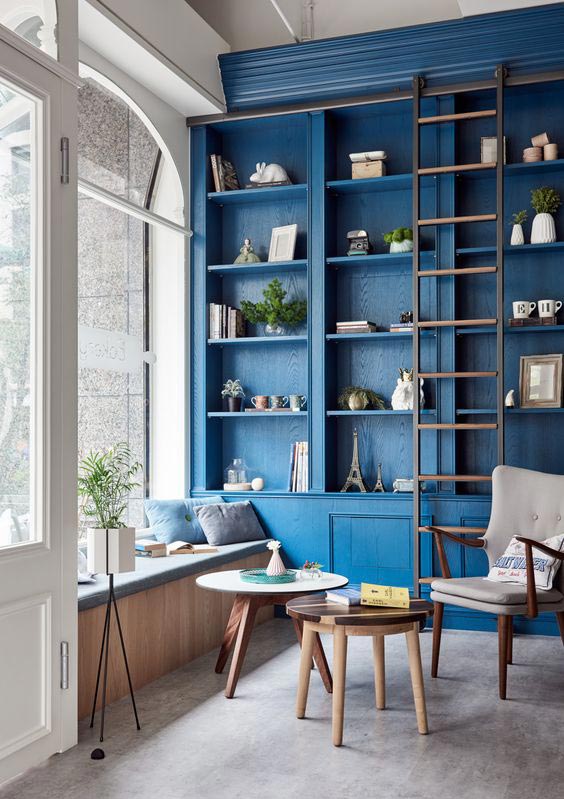
Along with all the above, we’re seeing colours used in smaller sections as statements which compliment and accentuate the cool 2018 palette. Super rich earthy colours like marigold, Civara, Burnt Brick and Artisan’s Gold are the perfect contrast. Use these to paint the inside of your bookshelf, a small coffee table or the skirting of the whole room.


Norgarb Properties Agent Andre Ter Moshuizen who specialises in the Claremont area, shares some household tips and handy home hints with you every month. Read more of his articles here.

Andre Ter Moshuizen: 082 602 1367 | andre@norgarb.co.za | www.norgarbproperties.co.za


www.harfield-village.co.za
www.facebook.com/harfield.village.community

Stylish instead of Fashionable


“Never confuse fashion and style. Fashion relies on unattainable looks on women with unrealistic bodies. Style is about utilizing the best aspect of you.”

Stacy London US fashion consultant, author, media personality. 


Fashion is dictative from the outside in but Style is unique to each person it is from the inside out. Think of adding fashion as a fun aspect like seasoning to a basic meal.  Style which is something that grows as you find your identity and both allow as well as cultivate it to manifest over time. Style is a combination of aspects, it’s not just about clothes it is about attitude and is a short hand language without words reflecting so much about you.  At first discovering this is like sketching, then as you expand like a painting till you become a work of art. 

I was a great follower of Fashion when I was very young now I realise this was important as part of my evolvement, as I was growing up in the most interesting time of innovative change. I guess it began to be fashionable to not be fashionable & was the start of creating a whole new sense of style. This was the swinging 1960’s & looking back  that’s where the idea of alternative fashion really started, where Street Fashion started. It was in the air & if one was receptive as I was one caught the trends as I did just by being aware & being in the present. 

I began to think my time had come when the Beatles made their first LP record, before that I simply couldn’t identify with much that was currently considered fashionable. It was the start of another form of culture, an experimental counter movement in layers of ways, very influence by Musicians & London.     

It is inevitable that as you are discovering your style that you will make mistakes, till you grow slowly into who you want to be.

I wore miniskirts when I never should have as I never had the legs for it!  Somehow I started to get a reputation for innovation with my friends, when I did a makeover on my best friend Judy which changed her life! My conservative boyfriend Frank recognised my sense of style & asked me to go shopping with him. I dressed him in purple bell bottoms & a tailored shirt slightly unbuttoned & to my surprise he became more of a confident extrovert!

This began an interest in making clothing & accessories which slowly evolved into my career going down many diverse paths till today, when I teach the Art & Skill of Dressmaking from my Studio & Creative Work with Special Clients who need help to make their clothes feel more suitable, as an expression of what they would prefer to project as an image.         

One of the most stylish women I have ever had the privilege to work with, recently came to me to adjust her wardrobe to make what we now call Wearable Art. The first sentence she uttered as she came into my Studio was an apology for not being fashionable. I took one appreciative look at this unique woman & said instantly that is because you are Stylish which goes so much farther than Fashion!                     

It is different for everyone, but for me it is about finding what basically suits you which is generally a core clothing which you are comfortable in, because the more unconscious one is of the clothing you are wearing, once you put it on the better.

This has become the personal recipe for success for me in my personal life & study of what works for others.

Fine Feathers Sewing School


www.facebook.com/harfield.village.community