2018 Interior Colour Trends

Every year we see new colours come and old ones go, bringing with them a new mood and a whole new look. We always see the new year as a fresh start, so why not give your home the same treatment. Below are some of the colour trends to look out for in 2018.

2018 brings with it a richness, building on the colours of 2017. Think calm, think luxury, think colours that counteract the fast pace of life we live every day. This year’s colours, mixed with the new trend in simplistic interiors (think KonMari), are all about slowing down and creating that space to come home to and unwind in.

Black on Neutrals

Black is the new black. Not just any black though, grey-black (black chiffon) is a particularly popular colour, followed by purple-toned black such as Shadow, and the “less is more” Deep Onyx. Pair these up with gorgeous neutrals such as Cream, Thunderbird, Kombucha or Wabi-Sabi and your room is sure to make a statement.


Berries and Blush

The Pantone colour of the year is Ultra Violet. Mix that with the other berry tones that are popping up such as Caliente, Dark Plum, Chinoiserie Red and the subtler Blush and you’ve got this year’s rich berry palette ready to go. 


Blues and Greens

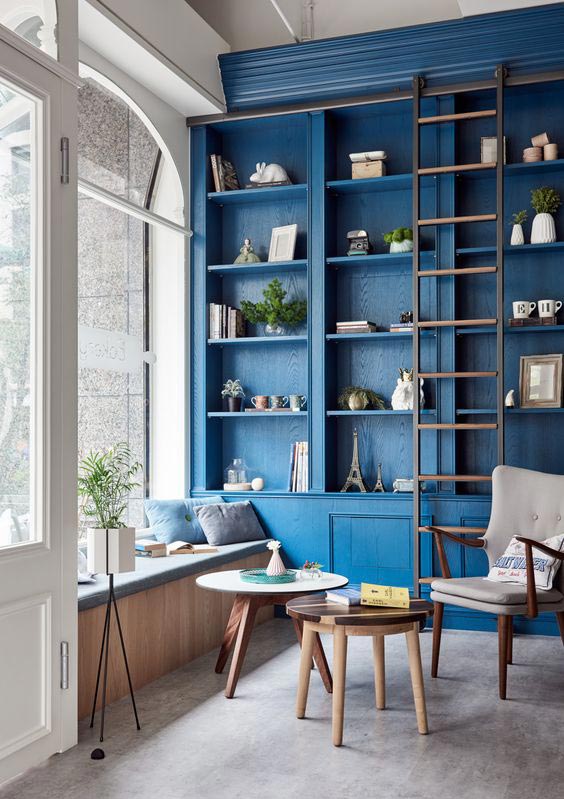
Always calming, this year takes a huge leap into this palette and anything from bold to subtle goes. Think Sage, Oceanside, Bottle Green, Oval Room Blue, Deep Turquoise, Olive, and Dusk. Apparently, this year there is no such thing as too much blue and paired with some subtle green accents or a statement wall is all you need to get this look.


Greys 

Not just fifty shades of it, but all the shades! Grey with pink undertones, grey with purple undertones, blue undertones, green, grey on grey, almost-white grey, every possible shade imaginable! We’re seeing a lot of this paired with whites such as Stone White and Ramie.


The Accents

Along with all the above, we’re seeing colours used in smaller sections as statements which compliment and accentuate the cool 2018 palette. Super rich earthy colours like marigold, Civara, Burnt Brick and Artisan’s Gold are the perfect contrast. Use these to paint the inside of your bookshelf, a small coffee table or the skirting of the whole room.


Norgarb Properties Agent Andre Ter Moshuizen who specialises in the Claremont area, shares some household tips and handy home hints with you every month. Read more of his articles here.

Andre Ter Moshuizen: 082 602 1367 | andre@norgarb.co.za | www.norgarbproperties.co.za


www.harfield-village.co.za
www.facebook.com/harfield.village.community

Stylish instead of Fashionable


“Never confuse fashion and style. Fashion relies on unattainable looks on women with unrealistic bodies. Style is about utilizing the best aspect of you.”

Stacy London US fashion consultant, author, media personality. 


Fashion is dictative from the outside in but Style is unique to each person it is from the inside out. Think of adding fashion as a fun aspect like seasoning to a basic meal.  Style which is something that grows as you find your identity and both allow as well as cultivate it to manifest over time. Style is a combination of aspects, it’s not just about clothes it is about attitude and is a short hand language without words reflecting so much about you.  At first discovering this is like sketching, then as you expand like a painting till you become a work of art. 

I was a great follower of Fashion when I was very young now I realise this was important as part of my evolvement, as I was growing up in the most interesting time of innovative change. I guess it began to be fashionable to not be fashionable & was the start of creating a whole new sense of style. This was the swinging 1960’s & looking back  that’s where the idea of alternative fashion really started, where Street Fashion started. It was in the air & if one was receptive as I was one caught the trends as I did just by being aware & being in the present. 

I began to think my time had come when the Beatles made their first LP record, before that I simply couldn’t identify with much that was currently considered fashionable. It was the start of another form of culture, an experimental counter movement in layers of ways, very influence by Musicians & London.     

It is inevitable that as you are discovering your style that you will make mistakes, till you grow slowly into who you want to be.

I wore miniskirts when I never should have as I never had the legs for it!  Somehow I started to get a reputation for innovation with my friends, when I did a makeover on my best friend Judy which changed her life! My conservative boyfriend Frank recognised my sense of style & asked me to go shopping with him. I dressed him in purple bell bottoms & a tailored shirt slightly unbuttoned & to my surprise he became more of a confident extrovert!

This began an interest in making clothing & accessories which slowly evolved into my career going down many diverse paths till today, when I teach the Art & Skill of Dressmaking from my Studio & Creative Work with Special Clients who need help to make their clothes feel more suitable, as an expression of what they would prefer to project as an image.         

One of the most stylish women I have ever had the privilege to work with, recently came to me to adjust her wardrobe to make what we now call Wearable Art. The first sentence she uttered as she came into my Studio was an apology for not being fashionable. I took one appreciative look at this unique woman & said instantly that is because you are Stylish which goes so much farther than Fashion!                     

It is different for everyone, but for me it is about finding what basically suits you which is generally a core clothing which you are comfortable in, because the more unconscious one is of the clothing you are wearing, once you put it on the better.

This has become the personal recipe for success for me in my personal life & study of what works for others.

Fine Feathers Sewing School


www.facebook.com/harfield.village.community


What can neuroscience tell us about the brain processes of panic?

Panic stations are upon us – the water crisis deepens and Day Zero is fast approaching.  But what can neuroscience tell us about the brain processes of panic, and how we can get a handle on them? 

By Dr Samantha J. Brooks Ph.D.


These days in Cape Town, raw emotions are running high as we are reminded daily that our water supply is running out. The taps in our homes could soon – if day zero arrives – be turned off. It is a prospect that fills people’s cognitions with fear and leaves us questioning, “how did we get here?”.


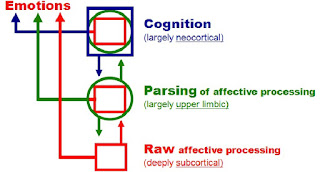
The thought of losing our vital, life-affirming water supply has contributed to the emergence of the water guzzler sub-species of folk, who we continue to hear about in the local news despite disaster being imminent.  These folk continue to behave in this way, because our emotions parse with and hijack our cogntions, and fear transforms into panic. Desperate times call for desperate measures, as the water guzzlers take a narrow perspective to ensure that their homes - regardless of the water restrictions applied to everybody else - have plenty of water.  Panic is inevitably fueled by raw, affective rage – and people not only act in denial (which is also a river in Egypt with lots of water!), but also begin fighting each other as they fill their 25 litre cannisters.   The basic negative emotions (also known as affective states) of FEAR, PANIC and RAGE are what the late, great neuroscientist, Professor Jaak Panksepp called primary processes, which are common to animals too.

Humans however, can choose to exert control over these primary processes (which originate from activation of mid-brain areas, such as the amygdala), by exercising secondary processes of learning and memory (found in the hippocampus) that strengthen tertiary processes to remember our future intentions and exercise self-control (in the prefrontal cortex). But what are the practical steps that we can take to exert control over our primary processes during this water crisis?


We need to remember the bigger picture perspective if we are going to alter our water consumption habits and quell the natural tendency to descend into behaviours fuelled by fear, panic and rage. We can consciously pay more attention to our relationship with water, and use small amounts to wash, shower over a bucket and use the short eco-cycle on the washing machine once a week. By taking conscious control in this way, we will find that our primary emotions of fear, panic and rage begin to lessen, and we may avert the arrival of day zero.

But what if day zero actually comes? Capetonians must remember that the tertiary processes in the prefrontal cortex of the brain are what allow us to keep control of ourselves. If we must adhere to new, unfamiliar rules, such as the daily collection of 25 litres of water, it will be our prefrontal cortex that enables us to adapt to this rule and survive.  Our prefrontal cortex - if we practice to be conscious of our water usage habits now – will learn how to regulate primary emotions and keep fear, panic and rage at bay.  And our secondary processes in the hippocampus brain networks will help us to remember how precious our short supply of water is.  In the end, perhaps the whole world will learn from Capetonians, about how to use our brains to cope with the emotional consequences of a changing climate.

Dr Samantha Brooks is a neuroscientist at the UCT Department of Psychiatry and Mental Health, specialising in the neural correlates of impulse control from eating disorders to addiction.  For more information on neuroscience at UCT and to contact Samantha, see www.drsamanthabrooks.com.


 Click to read all previous articles by Dr Samantha J. Brooks Ph.D. 


TUNA CAKE

TUNA CAKE - Delicious as a Starter

INGREDIENTS:
- 2 pkts Tuc Original Biscuits
- 2 tins tuna in water/brine (small)
- 2 tubs smooth cottage cheese
-75 gms butter (melted)
- 1 boiled egg (optional)
- 1 small onion, chopped
- 1 ripe avocado
- Little mayo in tuna
- Salt and pepper to taste
- Chopped parsley (opt)

BASE:
- Crush 1 pkt tuc biscuits together with melted butter
- Press down on springform base

METHOD: 
- Put a layer of tuna over base
- Then a layer of one tub cream cheese
- Sprinkle inbetween some of the crushed tuc biscuits
- Slice avo and sprinkle with some lemon juice, salt and pepper and layer
- Top with second tin tuna
- Top with second tub of cottage cheese
- Sprinkle with rest of biscuits (they can go down the sides)
- Top with boiled egg mashed together with fresh parsley (optional).


HOW TO MAKE YOUR SUBURB A NO-GO ZONE FOR CRIMINALS

HOW TO MAKE YOUR SUBURB A NO-GO ZONE FOR CRIMINALS
Compliments of Fidelity ADT

Your neighbours are often the first people to see if something is wrong at your home, which makes them the ideal partners in the fight against crime.

This is why Fidelity ADT has issued a public call on South Africans to become involved with their local community safety groups as these voluntary organisations have time-and-time again been proven to make a positive difference.

If you have just moved into the Village, Fidelity ADT recommends you make the effort to meet the people who live next door as soon as possible and sharing contact details with them. They could also provide useful advice on existing community safety organisations in the area. If you are an existing resident in the area but have not made contact with your neighbours, do it now, it is not too late.

Harfield Village is part of a very active neighbourhood watch known as Har-Lyn Neighbourhood Watch (‘’HNW’’). We encourage all residents to become involved with the HNW as a matter of urgency. The involvement could take many forms – from becoming a patroller to offering monetary or logistical admin support. For more information contact HNW on info@harlynwatch.org.za or 071 802 2454.

Knowing who lives in your area and engaging with your community often leads to combined security implementation and these have a far greater impact on an area than individual efforts. When neighbours start sharing security tips and reporting suspicious individuals or vehicles spotted in their area, security providers and SAPS are able to get a better understanding of the activity in the area and implement effective crime prevention tactics.

Many streets in the Village have formed Whatsapp groups and we encourage you to join your street group and share information. HVCID has also set up a Whatsapp crime alert group which you can join by contacting Jenni Coleman on admin@hvcid.co.za.

The men and women of the South African Police services simply cannot be everywhere all the time. Neighbours that care about each other and become active participants in the safety of their suburb can make a massive difference.

JENNI COLEMAN
Manager - Harfield Village Community Improvement District (HVCID)
Cel: 081 412 6109 E-mail: admin@hvcid.co.za


Are your New Year's Resolutions still in place?


You made your New Year’s resolutions, and started all strong in the beginning of January.  That is great, but more importantly, how is it going now, some months later?  Research has shown that about half of all adults make New Year’s resolutions, but less than 10% manage to keep them for more than a few months. That’s not a great statistic!  Our New Year’s Resolutions are meant to guide us into better habits over the year, so don’t fret if you have slipped, let’s relook at your goals for the year and see what we can do to salvage some of them.

Why New Year’s Resolutions Fail
The main reason people don’t stick to their resolutions is that they set unrealistic goals. Our resolutions normally need lifestyle changes, and we know that changing behaviours is difficult to do.  But when we make our resolutions we forget to look at how challenging they are to achieve and what kind of behaviour changes are required. 

Resolutions can also fail if you are not ready to change the behaviours.  Do you want to eat healthier, or do you just think you should be eating healthier?  Another common reason for failed resolutions is because you may think that if you change a behaviour (such as exercising more and losing weight), your entire life will change.  But it doesn’t, and when you realise this you may get discouraged and relapse into old behaviours.

When it comes to health, all-or-nothing goals with unrealistic expectations that don’t fit into your lifestyle will set you up for failure. So go back to your New Year’s Resolutions and see if you can amend them so that by next January you won’t have to make the same ones again!

Make the resolutions SMART
We all know about SMART goals, that is, the goal must be specific, measurable, achievable, realistic and time-bound.  And your resolutions shouldn’t be any different.  A resolution of eating no more sugar, though admirable, is not SMART.  A SMART goal would be to have no more than 2-3 small treats per week.  Look at your resolutions and see if you can’t make them a little SMARTer to make them more realistic.

Make the resolutions small lifestyle changes
Our resolutions are often too ambitious, and we end up becoming discouraged and giving up.  A good idea is to break the resolution into smaller, more manageable lifestyle changes.   Instead of a goal of not eating carbs anymore, break it into a smaller goal of cutting carbs out of most of your dinner meals, thereby not taking away quick and easy options such as oats in the morning or a baked potato for lunch.  Look at your resolutions and find smaller achievable goals that are easier to change and will help you to get to your resolution over time.

Make one change at a time
Trying to change too many things at one time can leave you feeling overwhelmed.  If you want to eat healthier, stop drinking, exercise more and give up smoking, choose a one to three small changes within these broader goals and do your best to stick to them for a couple of weeks.  Once you have those under control, add a couple more.  In this way you will be working on improving your health over the year and not feel like you didn’t manage anything when you reflect at the end of the year.

Don’t have strict rules
Changing your behaviour takes time, dedication and mindfulness, and our lives aren’t always running perfectly to make this easy.  Don’t limit yourself to strict rules.  Extremes such as NO treats or NO alcohol generally don’t work.  Your lifestyle needs flexibility.  You can have your favourite food, or enjoy a meal out with family or friends, but work on not overindulging so that they can play a role in your life. 

Don’t get derailed by slips
Remember that you are human.  You will slip from time to time.  But that doesn’t mean that you have failed.  It just means that you need to be more careful the next day or week.  If you are trying to eat less junk food and you slip on holiday, let it go and carry on with the healthier habits once you are back home.  Use your slips to learn how to manage tough situations and know that if you are mindful, you are definitely doing better than before!  Each day is a new day to get back into your healthier routine.

Change your thinking
To change your behaviours you have to change your thinking around the behaviours.  Neuroscientists have discovered that habits are created by thinking patterns that create neural pathways and memories.  Change therefore requires creating new neural pathways from new thinking.  So instead of saying ‘I’m not going to drink anymore’, rather say ‘I am only going to drink on the weekends’.

Change can feel overwhelming, especially when your day to day life feels chaotic.  Make small changes over time.  Divide your resolution into a number of small goals that you can tackle over time.  It’s easy if you are patient with yourself and forgive yourself when things don’t work out perfectly.  Go ahead, I dare you to try it! 

Kim Hofmann RD(SA)
Phone: 021 674 4666
Cell: 084 206 2715


This month we are going to look at worms!


In this time of drought personal hygiene is of paramount importance. With short showers and little access to water it essential for us to keep our hands clean. Deworming your pet is an important part of its regular health regime.


So this month we are going to look at worms! 

The four most common types of worms that affect our domestic pets are:

Round Worms –  Toxocara Canis 
                                                Toxocara Leonis

As one of the most common parasites to affect our pets, almost all dogs and cats will be infected with roundworms at sometime in their life but they are frequently seen in puppies and kittens. Round worms resemble cooked spaghetti and live unattached in your pet’s intestines where they feed off partially digested food.

How does my pet get infected?


• The adult worms shed eggs through the faeces of the infected pet.
• Other dogs become infected by licking or sniffing the infected faeces
• Roundworm eggs can have ‘paratenic’ hosts such as earthworms, cockroaches and birds. If your pet ingests one of these it will become infected.

Is it true that a puppy or kitten be born with roundworms? Yes!

Round worms have a complicated life cycle that includes many different stages one of which is encysted larvae. These larvae migrate through different body tissues and are capable of crossing the placenta of a pregnant dog or cat to the unborn puppy or kitten. They can also be found in the mother’s milk. Therefore, when the offspring are born they will already be infested with adult worms which in turn will start producing eggs .

What are the symptoms?

 An adult dog or cat may show no symptoms of roundworm infestation or may have diarrhoea. However, puppies and kittens are often presented with:

potbelly
stunted growth
persistent diarrhoea


Are Humans At risk?

If a human accidentally swallows an infected roundworm egg, the encysted larvae can migrate through various tissues and become a problem. This is an EXTREMELY RARE occurrence and normal hygiene control should prevent this.

wear gloves when handling faeces
clear away your pets faeces timeously particularly from areas where children play.
wear gloves when gardening
WASH YOUR HANDS after any of the above activities

How should I treat my pet ?

Visit your Veterinary clinic. There are many excellent dewormers on the market and your veterinarian will be able advise you which is the most suitable for your pet. Modern dewormers usually kill the worm in the intestines, where it dissolves. These drugs are safe and should have no side effects. Depending on the severity of the infestation you may need to repeat the medication 10-14days after the initial treatment, or even complete a longer course.


  • Tape Worms – Dipylidium Caninum    
Tapeworms are particularly important because  of their association with fleas. They are segmented worms that attach to the lining of the small  intestine in cats and dogs. Tapeworm segments develop behind the head of the worm, and move down the tapeworm as they mature until they are finally deposited outside the body in your pets faeces.

They are often seen as little ‘grains of rice’ on the fur of your pet and are mobile. As they dry out the segment opens releasing fertilized eggs into the environment.

How does my pet get infected?

• The tapeworm MUST pass through its intermediate host –THE FLEA- before it can infect a dog or cat.
• Fertilized tapeworm eggs lie in the environment and are then eaten by flea larvae.
• Inside the flea larvae the tapeworm eggs hatch but do not develop into adult worms.
• Only when the adult flea is accidentally eaten by a dog or cat, usually during grooming, does the tapeworm itself mature and start producing more eggs.

What are the symptoms?


Tapeworms do not usually cause serious problems in adult pets. However in young puppies and kittens heavy tapeworm infestation can cause:

• anaemia
• stunted growth
• intestinal blockages

Are Humans At risk?
This particular tapeworm does not pose any threat to humans.

How should I treat my pet ?

FLEA CONTROL - IS PARAMOUNT IN THE MANAGEMENT AND  PREVENTION OF TAPEWORM INFESTATION.

Creating a flea free envirnment – which involves treating both your pet and the environment - is the only way to prevent recurring tapeworm infestation. Deworming treatments for tapeworm are extremely effective but once again several treatments may be necessary along with good flea control to eradicate the infestation completely. There are excellent flea treatments available (for both house and pet) from your Veterinarian.
  • Hook Worms –  Ancylostoma Caninum    
                                               Ancylostoma braziiense                               
Although not as common as the previous worms we have discussed, the hook worm is a partucularly nasty little critter! Their mouthparts have hooks, which allow them to attach onto the intestinal wall of the cat or dog where they suck blood. The active worms often leave the bite site, which will continue to seep blood. The adult hookworm lays eggs that pass from your pets faeces. The eggs hatch into larvae that are excellent swimmers and can travel in raindrops or dewy vegetation while waiting for a suitable host to come along.

How does my pet get infected?

• larvae burrow through your pets skin and then migrate via the blood to the trachea and lungs where they are coughed up and swallowed.

Once in the intestines they settle down mature, mate and produce eggs!

• larvae can be eaten in contaminated food or water. Most larvae will pass into your pet’s intestines where they will mature. However, some may migrate through tissue where they can encyst and lie dormant in muscle, fat and other tissue.

• in the female dog and cat these dormant larval cysts migrate into the mammary tissue thus infecting her nursing young.

What are the symptoms?

Hookworm can cause severe disease in adult dogs and cats as well as puppies and kittens where it can be life threatening. 

anaemia –pale gums 
black tarry stool
vomiting and diarrhoea
coughing
emacaition

Are Humans At risk?

Hookworm larvae can burrow into the skin (usually through bare feet) and can cause a disease called ‘cutaneous larva migrans’.

How should I treat my pet?

Visit your Veterinarian if you are concerned about your pet. Hookworms are very small and diagnosis of an infestation is usually done through microscopic examination of the faeces. So you may be asked to take in a stool sample. There are excellent dewormers for the treatment of hookworm. A prolonged course may be required to eradicate the infestation.

  • Whipworms-  Trichuris trichiura       
Whipworms are extremely small worms that live in the cecum and colon of your pet where they cause severe irritation. The adult lays eggs intermittently and it can take up to 12 weeks after maturing for the adult to begin laying eggs which are passed out in the faeces.

How does my pet get infected?

by eating infected matter
contact with infected animals
whipworm can live in the enviroment for years and be present in
 soil, water, food , faeces and animal flesh

What are the symptoms?

Whipworm can affect dogs and cats of any age and can cause serious disease.

weight loss
water,bloody diarrhoea
general debilitation

Are Humans At risk?
No.

How should I treat my pet?

Visit your veterinarian who can do a thorough examination. It may take several microscopic examinations over a period of time to diagnose whipworm, as eggs are not always present in the affected animals faeces. There are excellent treatments for whipworm available from your veterinarian.

As you can see from above our pets are at constant risk of worm infestation. Regular deworming of your pet is an essential part of its general health, you may see no signs of worm infestation but that doesn’t  mean that they aren’t there!

47 Kenilworth Road, Cape Town
kenvet@telkomsa.net
Telephone: 021-671-5018