BEHAVIORAL PROBLEMS IN PETS

Separation Anxiety
Does your dog fret when you leave home? Bark incessantly or is destructive? Then it could be suffering from separation anxiety.

What is separation anxiety?
Separation anxiety is triggered when a dog become upset when separated from
its owner. It can display a variety of negative behaviours such as:
  • the dog may be disruptive or destructive
  • the dog might urinate, defecate in the house
  • may bark or howl incessantly
  • may chew and /or dig in an attempt to escape
  • may drool and show anxiety when owners prepare to leave the house
What triggers this behaviour?
  • There are various theories as to why dogs develop separation anxiety:
  • The dog believes it is the 'pack' leader and that it is responsible for the welfare of its owner. When the owner leaves without the dog, it is impossible for the dog to be caretaker, which causes the dog stress.
  • The dog may have experienced the loss of an important person, or the company of another pet previously, particularly if it is a rescue dog.
  • A change from the normal home routine i.e.; owner no longer works from home, or spends a greater time away from home.
  • Changing homes or a change in the family.
How can you help your dog?
  • Take charge by being the leader: many behavioural problems arise from a lack of leadership by the owner.
  • Encourage your dog to be confident and independent by trying to find a happy balance between respect for his leader (you), enjoying your companionship and attention and being alone.
  • Don't let your dog follow you around constantly at home . Your dog needs to learn that it is ok to be alone. Send him to his basket or blanket and give him 'chill time'.
  • Teach your dog to be relaxed when he is away from you i.e.; place his basket in another room and send him to it with a chew or a favourite toy so it's not a punishment but treat time!
  • Try to retrain your dog to understand that your absences are normal.
  • Don't give your anxious dog too much attention - he needs to learn independence.

If your dog is suffering from mild separation anxiety the following retraining may help:

If he gets anxious when you prepare to leave:
  • Pick up car keys, put on your jacket etc but don't go anywhere! Sit and watch TV or potter about the house for a while. Then put the keys down and take off your coat. If you do this often your dog will no longer associate these things with your departure.
  • Do trial run departures; go out for 5 minutes and then come back gradually increasing the amount of time you are away, do it randomly so your dog cant guess when you will be back!
  • Give your dog a toy puzzle with treats inside (a Kong works really well) when you leave to keep him busy when you go out.
  • Don't make a big fuss when you leave or when you return
Speak to the hand! Ignore your dog!

"When you give a separation-anxious dog attention, dole it out in very brief increments. One second can be enough."

Dogs that have anxiety issues are often constantly in need of attention. 
You need to learn to ration your attention to help him understands that:
a) he can survive without you
b) you are the boss
  • If your dog approaches you for affection ignore him for a few minutes until he gives up, then YOU ask him to come to you and give him love and a treat.
  • Give your dog attention when he is being good to reinforce positive behaviour i.e.; when resting in his bed or favourite spot and is relaxed.
  • It is better not to allow an anxious dog to sit on your lap (rather at your feet) sleep in your bed (rather in his own bed in your room) at least until he has gained some independence from you and has overcome its separation anxiety.
Use training to help build your dog's confidence: don't let your dog train you!
  • A dog will do whatever works to get your attention- barking, scratching and performing - try to ignore it don't even make eye contact!
  • Basic obedience training such as sit, stay, down if used every day can really build your dogs confidence. Remember always reward your dog for good behaviour with small titbits.
  • If you have the time join an obedience group
  • Exercise - it is so important for your dog's mind and body to be exercised with regular walks, runs or swims and it helps to use up all that extra energy!
Make home a safe haven.
  • Make sure that the dog has quiet, comfortable places around the house that he can go to and feel safe whether it is his bed or just a blanket or cushion, somewhere with familiar smells. Dogs need to have a base.
  • If you listen to the radio, music or have a TV going when your home it may help to leave it on when you go out
And so if all else fails..
Behavioural problems can be a nightmare and you may need to consult a professional behaviourist that can observe yours and your dog's behaviour in your home. There are also medications that can be prescribed by your Veterinarian that can ease your dog's anxiety.

PLEASE REMEMBER!
Your dog is not behaving badly in order to punish you - so don't punish him! Even if you come home to a real mess, punishing your dog after the fact will mean nothing to him. ALWAYS reward positive behaviour, be patient, get professional help but don't give up on your dog. He would never give up on
you.

Kenilworth Vet, Harfield Village

Principal's Pen - AREA SPECIALIST

Choosing an estate agent can be a daunting task.

A property is often ones most valuable asset and thus it's essential that you are in safe, capable and trustworthy hands when it comes to making
real-estate decisions.

Doing your homework and calling an area specialist is the way to start. With numerous agents in the area claiming this title it's not always easy to deduce who is who in the property zoo. Market share is the obvious tell-tale sign and consistent market share at that!

There were 6 sales recorded in Harfield Village this past May. Norgarb Properties sold 4 of them translating to a whopping 67% market share. In addition, Norgarb took an average of 1 day to sell each of them and sellers enjoyed, on average, a staggering 0.7% difference between the list price and
actual selling price.

To do your homework on Norgarb's credibility click on the respective links below:

Past sales
Testimonials
Industry partners

Give your area specialist a call:
021-6741120 – www.norgarb.co.zainfo@norgarb.co.za             

Principal's Pen - Buyers run the Gauntlet and Sellers Enjoy the Spoils

Lew Norgarb from Norgarb Properties reports continued frustration from buyers in Harfield Village and the surrounding Southern Suburb areas. With a continued shortage of property and additional purchasers entering the market, things are getting desperate. 

“I really feel for the buyers in this current market” says Lew. The last few properties we listed were snapped up in days or even hours and sold for very close to, or for the full asking price. For example 23 Third Avenue, Harfield and 1 Somerset Rd, Harfield (both 2 bed semis), were snapped up for full asking price and 25 Prince Avenue, Plumstead listed at R1.595 was sold in 3 days for R1.550.

With cash buyers a plenty sellers are the only ones enjoying the spoils. So how do bond buyers, let alone those who need to sell first, possibly compete in this aggressive arena?

For bond buyers one of the most prudent steps one can take is to get your finances in order. Not only does this mean having all the costs ready on the side, but also have a pre-assessment of your buying power. A prequalification from an experienced and reputable bond consultant will weigh heavily in your favour with agents and sellers alike. Anne-Marie Bamber from Better Bond has an outstanding track record and offers free friendly advice with no obligations. You can call her on 082 071 1665 or mail her on anne-marie.bamber@betterbond.co.za or click here for an overview.

If you need to sell first, things can be far more tricky. First and foremost if the intention is to use the proceeds of your sale to buy your next property you need to be sure that you are running the right numbers. An over inflated opinion of the value of your own home could lead to complications in that one’s buying budget is out of sync, but also your house is not likely to be sold quick enough to secure your new purchase. Contact Norgarb Properties for a free valuation with no further obligations on 021-6741120 or info@norgarb.co.za.

As it only takes one buyer to close the deal, it is common place for others to be left frustrated and kicking themselves for either not being prepared, not acting quickly enough or for being too cheeky with their offer amount. Norgarb suggests a few pointers that could save some heartache for buyers running the “gauntlet” in what is clearly very much still a sellers market.

1) Get your financials in order - Ensure you understand the costs associated with buying. The big ones include deposit (usually 10%, but this can be negotiable), transfer duty, legal fees plus bond attorney registration fees and bank valuations if taking finance. Cash buyers are often surprised to find out that they are charged a fee for the guarantees, which can be a couple of thousand rand. Buyers often don’t realise that a lot of these fees are over and above the purchase price, and not able to be included in the bond, but more importantly the money needs to be available as it will be called for prior to the property transferring into their name.

2) If you are selling as well - Don’t forget to factor in costs such as commission, VAT, beetle, electrical, plumbing and gas compliance fees. Electric fencing is another one! In most cases penalties apply if one cancels your bond without a minimum of 90 days notice. So don’t forget to get going with the cancellation if you are thinking of selling, you can always change this if you don’t sell down the line. Also you will be obliged to pay a few months rates in advance and this money will need to be available too.

3) Act fast – Don’t wait for the weekend papers, this can often be too late. Sign up for our show house/property alertsand enquire quickly if you see something that you like.

4) Offer fast - Once you have visited the property don’t drag your heals. If it's love at first sight and you feel it checks all the boxes get your offer in fast, especially if you ascertain that the seller has some sense of urgency to sell.

5) Get pre-qualified for finance -This can’t be stressed enough. We highly recommend Anne-Marie from Better Bondfor free advice and assistance with no obligations. Being pre-assessed from an experienced and reputable bond originator elevates not only your worthiness, but also your commitment in the eyes of the seller and his/her respective agent. If you were a seller and you received competing offers, you would be likely to accept the highest and least risky one too. Sellers frequently consider lower offers, because they are less risky. Being pre-qualified is just another feather in your cap and could be the deal breaker or deal maker when the pressure is on and Mr or Mrs Seller is debating your offer.

6) Don’t go it alone – Further to pre-qualifying your finances, good experienced bond originators also offer remarkable support prior to and during the application process. Having someone on speed dial that you can trust and rely on during that nail biting hurry up and wait period is invaluable. Apart from quicker turn around times and the obvious convenience, bond originators are able to apply to multiple banks thereby leveraging competitive interest rates often not achievable when going it alone. For self employed individuals, contract workers, ex pats and anyone with unusual or irregular income, this support is invaluable.

7) Sell first – Yes this is a scary thought to many. But the harsh reality is that conditional offers are up against cash and pre-approved offers and are less likely to be accepted. Even if they are accepted it is likely that the continued marketing clause, and the 72 hour clause, are likely to be recorded in the sales agreement. In most cases this means that although your offer has been accepted there is still a chance of you losing your dream home unless you can sell yours within 3 days if put to terms. These clauses are often unknown to the buyer and can be quite daunting. Please feel free to contact us should you have any queries or need any advice on this matter.

8) Be flexible on conditions in favour of the seller – While certain conditions might be unavoidable, being flexible on other matters could just help clinch the deal. Transfer and or occupation dates that suit the seller could for example be very helpful, or perhaps the exclusion of movable property that might be of financial or sentimental value to the seller.

Quick links:
Norgarb Properties
Better Bond
STBB (Smith Tabata Buchanon Boyes)

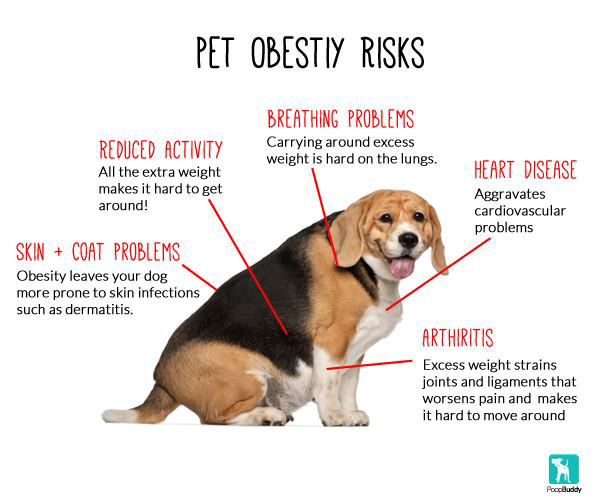
OBESITY – THE NEW EPIDEMIC!

Obese Cat
Did you know that nearly 50% of all our pets 
are overweight or obese? Keeping your pet slim and in good shape , can extend their life expectancy by up to 2 years and allows them to play, run and generally lead a happier life.

Why is it so important to keep my dog or cat trim?
At one time it was thought that fat tissue just sat around storing excess calories and adding to body mass. However, scientific studies have shown that fat tissue can be biologically active, producing inflammatory hormones and causing oxidative stress on the body, this in turn contributes to many disease processes such as: cancer, diabetes, heart disease etc and can lead to psychological depression.   

What do I do if I think my pet  is overweight?

People have different ideas as to what ‘normal’ is, fortunately there are guidelines that can help us establish to what extent your pet is over weight.

• you should be able to feel your pets ribs – hold your hand palm down and feel the knuckles with flat fingers of the other hand, this is how your dogs ribs should feel behind the shoulder blades. This goes for cats too.
• your vet can accurately weigh and measure your pet in order to establish where your pet sits on the body conditioning charts. This is important as it helps us monitor progress during weight loss. 

Feed the right food , in the right quantity, at the right time.

• reducing the quantity of food your pet normally  eats probably wont help with weight loss and could lead to nutritional deficiencies.
• listen to your vet – use a food that is specifically design to aide weight loss ( there are many available) and stick to it!
• don’t be tempted to give treats or feed more than is recommended. Most weight loss diets will not leave your pet hungry- so don’t be fooled.
• allowing unlimited access to food is the most common cause of obesity in cats. Have specific feeding times and remove food that is not eaten.

Join a slimming plan!

• many of the food companies have a slimming plan that gives help and encouragement to pet owners whose animals are on weight reducing foods. Most practices are involved in one or more of the programmes and can register you on the websites. They are great for keeping an accurate record of your pets progress and most companies will send you freebies for all your hard work!

In for the long haul….

Weight loss doesn’t happen over night, it is a long process that needs commitment from you the owner, particularly when things are going slowly. 
We all love our companion animals and want them to have a happy, healthy and long life. By taking the first steps to help your overweight pet you are being a responsible owner.

Don’t kill them with kindness!            

Help them enjoy life!
Kenilworth Vet, Harfield Village

CRASH COURSE ON FeLV AND FIV INFECTIONS IN CATS


Many cat lovers amongst you have heard the term FeLV and FIV. Some of you may even be unfortunate enough to have lost a cat to one of these diseases and yet other pet owners are completely unaware that they exist. So let’s have a quick look at these viruses and see what we can do to protect our pets.

FeLV - Feline Leukemia Virus: What is it and what does it do?
·         Feline Leukemia is the most common cause of cancer in cats.
·          It can cause blood disorders and lead to a state of immune deficiency, hindering the cat's ability to protect itself against other infections.
·         You will often see no sign of FeLV until your cat’s health progressively deteriorates over weeks, months, or even years causing recurrent illness interspersed with periods of relative health.

How is it spread?
·         The virus is shed in high quantities in saliva and nasal secretions, urine, feces, and milk from infected cats.
·         Cat-to-cat transfer can occur from bite wounds, during mutual grooming, and very rarely through the shared use of litter boxes and feeding dishes.
·         Transmission can take place from an infected mother cat to her kittens, either before they are born or while they are nursing.
·         However, FeL virus does not survive long outside a cat's body and die in a few hours under normal household conditions.

FIV – Feline Immunodeficiency Virus: What is it and what does it do?
·         Causes immune deficiency that eventually leaves the cat vulnerable to infections that would normally not be life threatening.
·         A cat infected with FIV may show no symptoms for years.

How is it spread?
·         It is transmitted from one cat to another mainly through bite wounds.
The following symptoms are commonly seen in both of these diseases.
·         Cat in generally poor condition with persistent fever and loss of appetite
·         Inflammation of the gums (gingivitis) and mouth (stomatitis)
·         chronic or recurrent infections of the skin, urinary bladder, and upper respiratory tract
·         Persistent diarrhea
·         Persistent eye conditions
·         Slow but progressive weight loss with severe wasting late in the disease process
·         Various kinds of cancer and blood diseases are much more common in cats infected with FIV
·         Unspayed female cats may  abort of kittens or have other reproductive failures
·         Some infected cats experience seizures, behavior changes, and other neurological symptoms
What can we do?
Test your cat  – Your vet should have a combo test that can tell you if your cat is positive or negative for FeLV and FIV, early detection will  help with the management of  yours cat’s health and also allow you to help avoid spreading infection to other cats.
Vaccinate your cat – a vaccine is available against the FeLV virus (can only be used on uninfected cats)
Sterilise your cat – male and female cats should be sterilized
Hope this has helped you understand these diseases. Let’s keep our cat population happy and healthy!

Kenilworth Vet, Harfield Village